







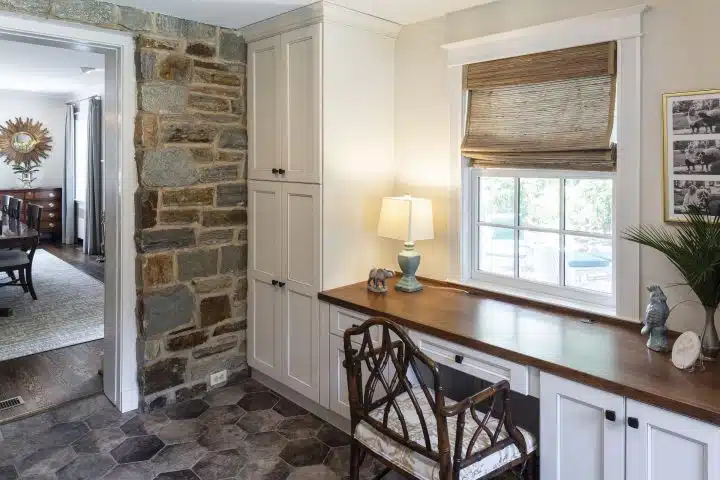
There is a point in many homes where everyday life seems to pile up. Shoes collect by the door. Coats migrate onto chairs. Backpacks land on the kitchen island. Sports equipment appears wherever there is an empty corner. Add pets, groceries, wet umbrellas, and Maryland’s changing seasons, and a busy entry can quickly become one of the hardest-working areas in the house. Thoughtful mudroom addition design gives all of that activity a place to go while creating a more comfortable transition between outdoors and the main living areas.
A Mudroom Is More Than a Place for Shoes
The best mudrooms solve several problems at once. They can provide coat storage, shoe storage, seating, charging areas, pet supplies, backpacks, sports equipment, and household overflow. Some include laundry facilities or a utility sink.
What belongs in the room depends entirely on the household. A family with young children may need individual cubbies and hooks at accessible heights. Homeowners with dogs may prioritize durable flooring and a place for leashes and towels. Someone who gardens may want storage for outdoor gear. The design should begin with those routines.
Location Makes a Big Difference
Placement is one of the first decisions in mudroom addition design. A mudroom works best when it sits naturally along the path people already use. For many homes, that means between the garage and kitchen. In others, a side or rear entrance makes more sense.
A mudroom addition can also improve an awkward transition. If the garage currently opens directly into the kitchen or family room, creating a dedicated buffer can help contain clutter and provide a more organized arrival point. When there is no practical way to carve that space out of the existing floor plan, a modest mudroom bump-out can add it without a large change to the home’s footprint. The location should make bringing in groceries, managing pets, and moving between indoor and outdoor spaces easier rather than adding extra steps.
Give Everything a Home
Storage is usually the heart of a mudroom. Built-in cabinetry can make a relatively compact space work surprisingly hard. Closed cabinets hide seasonal gear and less attractive necessities, while hooks keep frequently used jackets and bags easy to reach. Drawers or baskets can organize hats, gloves, dog supplies, sunscreen, and other smaller items.
A bench makes changing shoes more comfortable and can provide additional storage below. Individual storage zones are especially helpful for families because each person has a defined place for everyday belongings. Our closets and storage team designs custom cubbies, lockers, and cabinetry around exactly these needs.
Choose Materials That Can Handle Real Life
A mudroom is not a delicate space. Wet shoes, muddy paws, winter salt, sports equipment, and constant foot traffic are part of the job. Flooring should be durable and easy to maintain. Cabinet finishes should tolerate regular use. Wall materials near benches and hooks should be selected with scuffs and cleaning in mind.
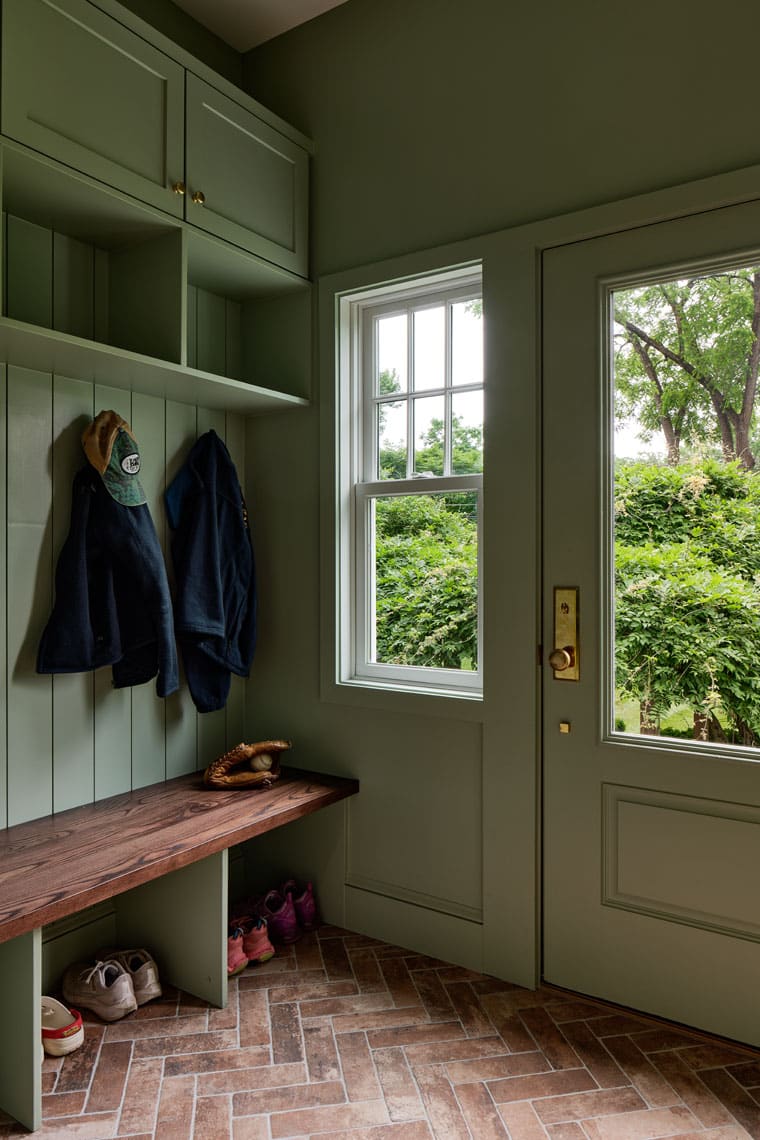
Painted paneling, a solid wood bench, and a herringbone floor stand up to daily wear in this mudroom bump-out.
That does not mean the room needs to feel purely utilitarian. Thoughtful cabinetry, interesting flooring, warm wood accents, quality hardware, and good lighting can make the mudroom feel like a genuine part of the home.
Think About Maryland’s Seasons
A Maryland mudroom needs to work differently throughout the year. Winter brings heavier coats, boots, and wet weather. Spring can mean rain and mud. Summer introduces pool bags, sports gear, and outdoor equipment. Fall brings another round of jackets and changing footwear.
Flexible storage helps the room adapt. Adjustable shelves, a combination of open and closed storage, and enough hanging space for different types of outerwear can prevent the mudroom from working beautifully in one season and becoming overwhelmed in another. A boot tray or a floor drain near the door can also help manage winter salt and slush before it reaches the rest of the house.
Consider Laundry and Pet Needs
With the right mudroom addition design, the room can sometimes serve more than one purpose. Combining laundry with a mudroom may keep everyday chores close to frequently used entrances, depending on the home’s layout. Counter space can provide room for folding while cabinetry keeps supplies organized.

A combined laundry and mudroom with a folding counter, upper cabinets, and built-in cubbies with a bench.
Pet owners may benefit from a designated feeding station, leash storage, or even a washing area when the room and plumbing allow it. These features should not be added simply because they are popular. They make sense when they remove a genuine frustration elsewhere in the home.
Do Not Forget the Exterior
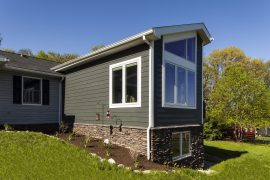
Because a mudroom addition changes the footprint of the home, exterior design matters. Rooflines, windows, doors, siding, masonry, trim, and foundation details should relate naturally to the existing architecture. The addition should not look like a utility box attached to the side of an otherwise carefully designed house.

This mudroom bump-out on a Baltimore City stone home uses painted siding, a low roofline, and traditional windows that complement the original house.
Window placement is especially important. Natural light can make a practical room feel welcoming, but windows also compete with valuable wall space needed for cabinetry and hooks. Balancing those needs is part of good architectural planning.
Let the Mudroom Protect the Rest of the House
Perhaps the greatest benefit of a mudroom is what happens outside the room itself. When coats, shoes, bags, pet supplies, and outdoor gear have designated storage, the kitchen does not have to absorb them. Hallways stay clearer. Family entrances become calmer. Everyday cleanup becomes easier.
Owings Brothers has completed Maryland projects where mudrooms connect directly to garages and use custom cubbies for coats, backpacks, shoes, and boots. That kind of planning turns a hardworking transition space into something the entire house benefits from.
Base Your Mudroom Addition Design on Your Family
A successful mudroom addition should not look like it was copied from a catalog. It should reflect the people who will actually walk through it every day.
Owings Brothers Contracting designs and builds additions for Maryland homeowners with an emphasis on function, architectural continuity, quality materials, and craftsmanship. By considering storage, circulation, durability, and the existing home together, our design-build team can create a mudroom that works hard without feeling purely utilitarian. You can see more of our work in the additions gallery.
If the busiest entrance to your home has become a daily source of clutter, a thoughtfully designed mudroom may be one of the most practical changes you can make. Request a consultation to start planning yours.